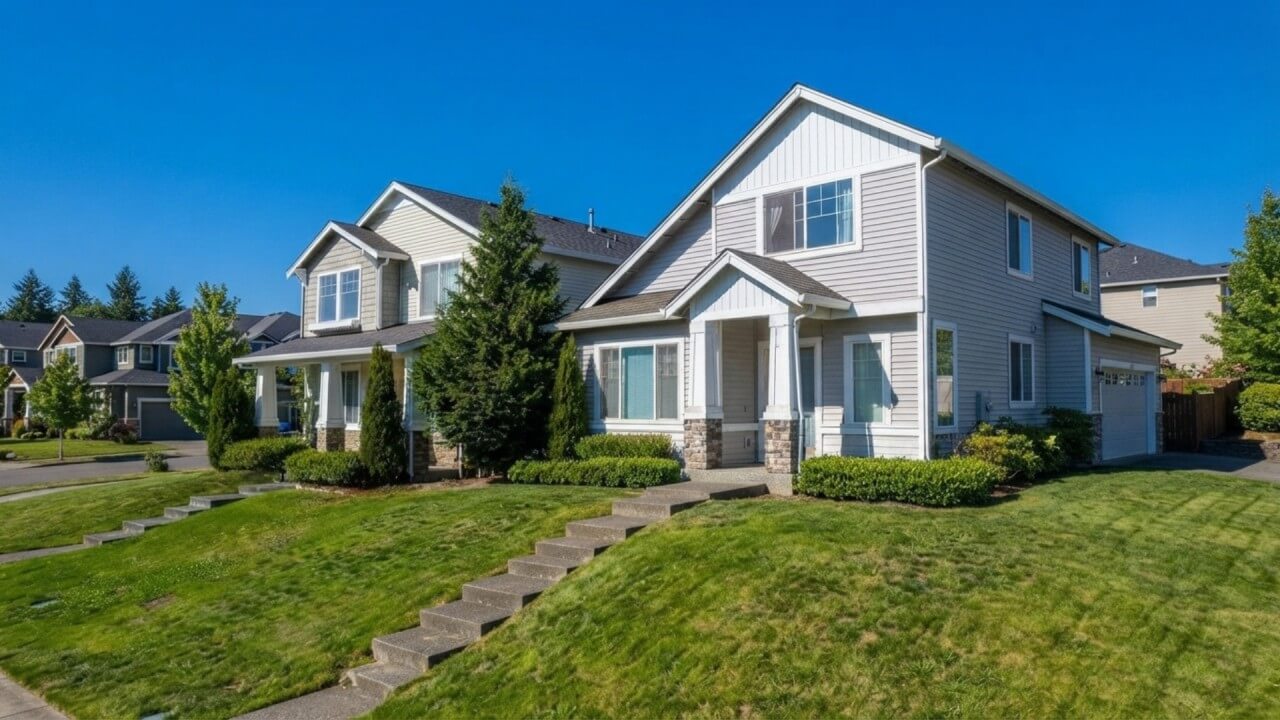
Two homeowners can live a few doors apart in California, own houses worth about the same amount, and still receive property tax bills separated by thousands of dollars.
San Diego offers a clear example. Martin bought a 1,400-square-foot home in 2016 for $850,000. Her annual property tax bill later came to nearly $13,000. Less than 300 feet away, Stephen owned a 1,600-square-foot duplex with a similar estimated market value.
His bill was a little over $7,000.
One major difference was timing. Stephen bought his property in 2002 for $365,000. Martin bought hers 14 years later, after Martin home prices had climbed sharply.
What caught my attention here was not that California gives longtime owners tax protection.
It was how visible that protection becomes when you compare two houses on the same block.
Prop 13 Has a Surprisingly Simple Rule Behind It
California voters approved Proposition 13 in 1978. Its property tax system is built largely around acquisition value, meaning purchase price matters far more than current market value.
Three rules explain most of the effect:
- Property is generally reassessed when ownership changes.
- Assessed value usually cannot rise by more than 2% per year after purchase.
- Basic property tax is about 1% of assessed value, with certain local charges added on top.
Imagine someone bought a house decades ago for $250,000. Even if that house is now worth more than $1 million, its taxable value does not automatically jump to today’s market price.
Now imagine the house next door sells for $1.2 million.
Its new owner generally starts with an assessed value near that purchase price. Over time, the gap between the two tax bills can become enormous.
Neither owner needs a special exemption. Purchase date does most of the work.
California’s expensive housing does not translate directly into equally extreme property tax rates. In 2016, the state’s median property tax payment was $3,550, compared with a national median of $2,350.
California was above the national figure, but not by anything close to the difference in housing costs found in many parts of the state.
Why California Created Prop 13
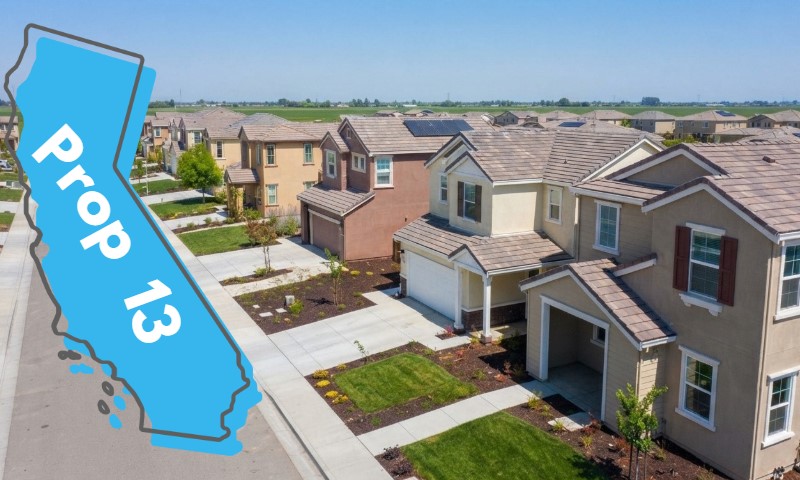
Housing prices were rising quickly during the 1970s, and property tax bills were rising with them.
That created a simple problem. A homeowner could become wealthier on paper because a house had appreciated, yet have no extra cash to cover a rapidly increasing tax bill.
Retirees and other people on fixed incomes became central to the debate. Someone could have bought an ordinary house years earlier, watched the neighborhood become expensive, and then faced much higher taxes without selling the property.
Prop 13 changed that relationship.
Instead of allowing taxable values to move freely with market prices, California limited annual assessed-value increases and capped the basic property tax rate.
Voters approved the measure on June 6, 1978, with about 65% support.
Prop 13 produced an immediate and substantial change. Property tax payments dropped by roughly 60% after it took effect.
Predictability can also be seen in the long-term numbers.
Before Prop 13, average market values grew about 4% annually and fluctuated considerably around that average. Since 1978, assessed-value growth has averaged about 3% per year and has been less volatile.
What I find more revealing than the anti-tax politics is the practical fear underneath them. Rising home values could turn into rising annual costs for people who had no intention of selling.
Fairness Gets Complicated Very Quickly

Predictability for one homeowner can create a large disparity with the person next door.
Martin’s San Diego property makes that visible. He was paying nearly $13,000 annually while Stephen, living nearby in a similarly valued property, paid about 40% less.
Two competing ideas of fairness sit at the center of Prop 13:
- Longtime owners should not face major tax increases simply because their neighborhood becomes more expensive.
- Owners of similarly valuable properties should not face radically different tax bills.
Prop 13 gives more weight to the first principle.
Purchase date can therefore matter more than current market value.
I kept coming back to one detail here: in most financial contexts, current value feels like the obvious number to use. Prop 13 deliberately makes history matter just as much.
Market value tells you what a house might sell for. Assessed value determines much of the tax bill.
If an assessment looks wrong, a property tax appeal is the formal process for challenging an incorrect property assessment.
Recent comparisons found that new buyers can face more than twice the property tax bill of a typical longtime homeowner in several large California cities, including Los Angeles, San Diego, Long Beach, Oakland, and Sacramento.
Prop 13 disparities become especially visible in places where property values have climbed substantially during a homeowner’s time in the house.
Benefits Do Not Stop With Retired Homeowners

Public discussion often focuses on older homeowners trying to stay in properties they bought years ago. Prop 13 reaches much further.
Its acquisition-value system can also apply to:
- Rental housing
- Multi-unit residential property
- Commercial property
- Industrial property
- Vacant land
That creates a harder policy question.
A longtime landlord can hold property with a relatively low taxable base while charging rent at current market levels.
Lower property taxes do not automatically become pure profit. Maintenance, insurance, vacancies, financing, and regulation all affect the final numbers.
Still, cases like that explain why debate around Prop 13 goes far past retirees and fixed-income homeowners.
What makes the argument difficult is that the same rule can protect someone living on a pension and someone holding an income-producing property bought decades ago.
People arguing about the policy are often arguing about who deserves protection, not just how the formula works.
A Wrap Up
Two similar California homes can carry very different property tax bills without either owner using a loophole.
One person may have bought decades ago. Another may have bought last year. Each starts with a different taxable base and then follows the same general rules.
Prop 13 gives existing owners protection against sharp tax increases tied to rising home prices. Over time, that protection can create very large differences between neighbors who own similarly valuable properties.
Seen up close, the system can look inconsistent.
Viewed on its own terms, it is doing exactly what voters asked it to do.