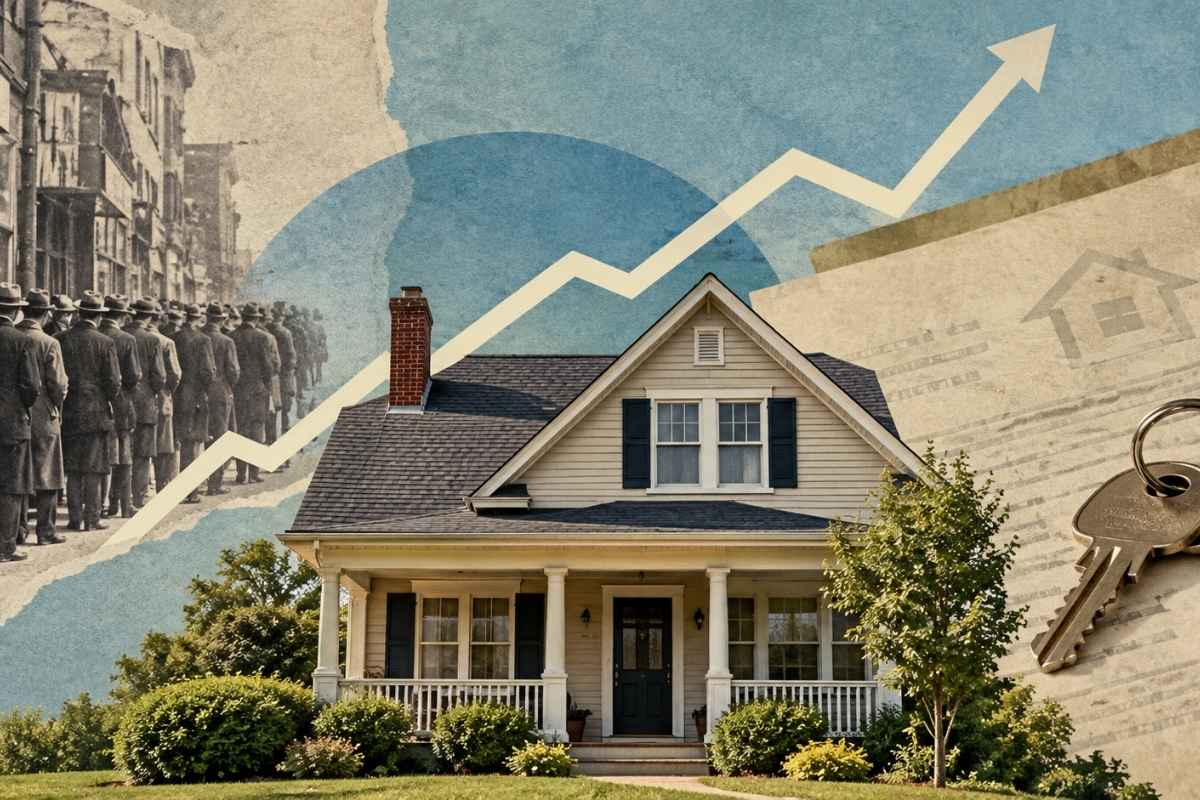

I grew up hearing terms like public housing and Section 8 without ever really wondering how different those programs actually were. Subsidized housing sounded like one category, almost as if every program worked through the same set of rules.
Years later, the more interesting part turned out to be how many different problems sit inside that one phrase.
Subsidized housing can mean a government-owned apartment, a privately owned unit rented with voucher assistance, or an affordable development built with public support and tax credits.
A subsidy may follow the tenant, attach to a particular apartment, or sit inside the financing used to build and operate a property.
Labels vary, but the financial question is similar: what happens when normal housing costs exceed what a household can reasonably pay?
Why Affordable Housing Can Be So Hard to Find

Anyone who has looked for a low-cost apartment knows that advertised rent tells only part of the story.
Median gross rent, which includes rent and utilities, reached $1,487 a month in 2024, even after adjusting for inflation.
Renters were putting a median 31% of household income toward those costs. A monthly rent that looks manageable on a listing can feel quite different once the rest of the household budget enters the picture.
Affordable housing is therefore not simply the cheapest unit listed online.
Research published in 2002 estimated that about 15% of low-income renter households lived in housing with moderate or severe physical problems, including:
- Faulty plumbing
- Heating
- Electrical systems
- Inadequate maintenance
That number helps explain why “low rent” and “adequate housing” cannot be treated as synonyms.
What People Usually Picture When They Hear Subsidized Housing
Public discussion often treats subsidized housing as if it were a single government product. Reality is messier.
Traditional public housing generally involves housing developed or operated through public authorities. Public housing is still a sizable part of that system.
HUD’s 2025 budget materials counted about 900,000 public housing units, housing more than 1.7 million people in 856,000 households. About 73% of those households had extremely low incomes. Still, those properties represent only one way subsidized housing reaches people.
Privately owned affordable developments can use tax credits, public loans, or other forms of support that lower the amount a project must recover through tenant rent.
For years, I had assumed the explanation was much simpler. What finally made the idea click was realizing that “subsidized housing” describes who covers part of the cost, not one specific building type.
A tenant subsidy can travel with an eligible household under certain programs. A project-based subsidy is tied to a particular unit or property. Financing subsidies work earlier in the process by helping make construction or operation financially possible at below-market rents.
Seen that way, subsidized housing is less about a certain architectural style and more about the arithmetic behind rent.
If Demand Is So High, Why Is More Affordable Housing Not Built?
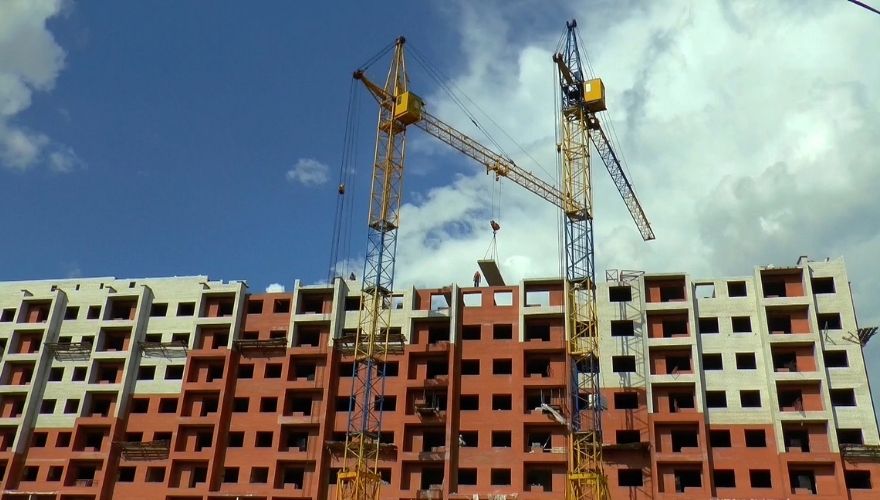
Long waiting lists make the question seem obvious. If people can wait one to five years or more for subsidized housing, why not build many more apartments?
Cost is a large part of the answer.
Affordable housing still requires land, labor, materials, insurance, borrowing, maintenance, property management, and long-term repairs. Those expenses do not fall simply because tenants have lower incomes.
At the same time, below-market rents bring in less revenue than market-rate rents. Somebody has to cover that gap.
Developers often do it by combining several funding sources. Local affordable-housing funds can be paired with loans, tax-exempt bonds, and Low-Income Housing Tax Credits.
In development finance, that pile of funding pieces is often called a capital stack.
One description that stuck with me called the system a “patchwork of agencies.” That wording makes sense once you see how many approvals, programs, lenders, and funding sources may need to line up before construction can begin.
More affordable housing can therefore require much more than permission to build. Financing has to work, public support has to be available, and projected rents still have to cover operating costs over time.
A workforce housing program can face a related problem when local wages lag far behind local housing costs.
Even when a program targets workers with steady incomes, lower target rents can still create a funding gap that has to be solved somewhere else in the project.
Waiting Lists Tell Us Something Important
Qualifying for housing assistance does not mean a household will actually receive it.
That point is easy to miss because many public benefits are discussed as though eligibility automatically triggers support. Housing assistance has often worked differently.
Affordability pressure was already visible in older rent data too.
Among renters, the share spending more than half of household income on rent increased to 20% in 1999, compared with 17% in 1989.
Those numbers show that today’s waiting-list problem did not appear overnight.
Shortages can exist in two places at once. Too few affordable units may be available, and too little assistance may be funded for households trying to rent units already on the market.
That helps explain why a waiting list is not just an administrative inconvenience. It is also a sign that available help is rationed.
Vouchers Help With Rent, but They Do Not Create Apartments
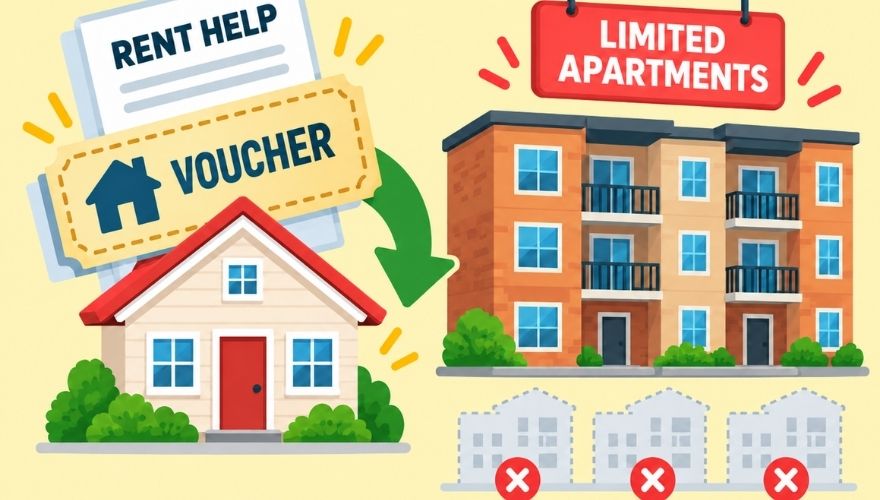
Housing vouchers can be extremely important for an eligible household because they reduce the share of rent that household must cover on its own.
Still, a voucher cannot create an apartment where no apartment exists.
That distinction sounds obvious, yet it changes how housing policy works in a tight rental market.
If vacancy is low and most acceptable units are already occupied, giving another household rental assistance does not automatically add another home. More households may now have help paying, but the number of available apartments has not increased.
Research on housing assistance has made the same point in another way. In low-vacancy markets, replacing physical public housing units with vouchers does not increase short-term housing supply.
Here, you can watch CEDAM explain how Section 8 Housing Vouchers work in just three minutes.
Vouchers help households pay for housing that already exists. Construction subsidies help create or keep units that can be rented at lower prices.
Affordable housing policy often needs both tools because ability to pay and physical supply are separate constraints.
Housing Is a Home and Also a Financial Asset
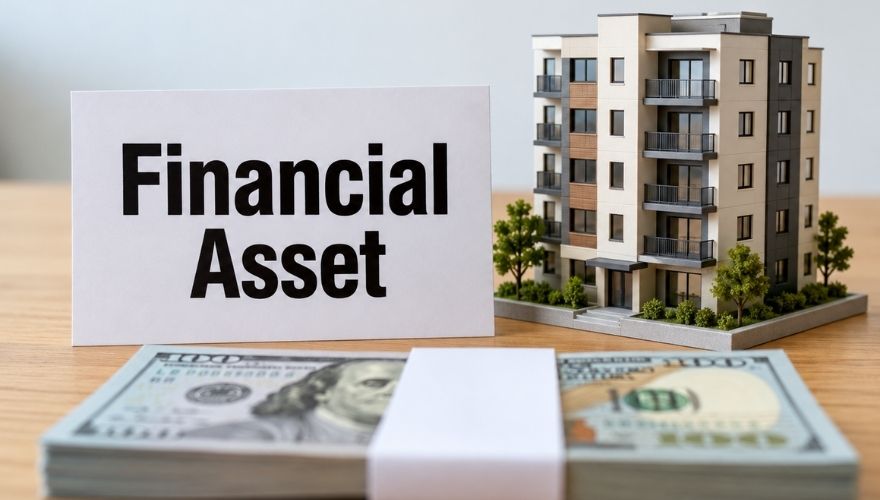
Housing gets complicated because one apartment or house can play two very different economic roles at the same time.
For the resident, it is shelter. For an owner or investor, it is also an asset whose value can rise as land prices, credit conditions, and investment demand change.
That dual role can produce strange-looking statistics.
The history of mortgage financing offers another example of how these forces can shape housing.
European estimates have put the number of vacant homes at roughly 38 million. Spain alone has been cited as having about 26 million homes with 3.8 million of them being vacant.
At first glance, numbers like those can make a housing shortage sound impossible. If there are more homes than households, how can affordability still be a problem?
Vacant properties are not automatically available rentals. Some are second homes, holiday properties, short-term rentals, poorly located units, or homes held outside the ordinary long-term rental market.
Location adds another layer. A vacant apartment in a weak labor market does little for a worker who needs housing near a high-cost employment center.
Rising property prices can also filter into rents over time.
Owners face higher acquisition costs, land values rise, and investors often expect returns tied to those higher values. Lower-income households then get pushed toward smaller units, longer commutes, poorer conditions, or overcrowding.
Subsidized Housing Is Really About Who Pays the Difference
Housing costs real money to build, finance, operate, repair, insure, and manage.
Problems appear when those costs produce rents that many households cannot absorb without giving up too much of their income.
Subsidized housing is one way society handles that gap. Public housing, vouchers, tax credits, below-market financing, and other forms of support all shift part of the cost off the tenant.
Affordable housing programs use different tools and target different income groups.
A workforce housing program may focus on households that earn too much for certain low-income programs but still struggle with local rents. Other programs focus on households with much lower incomes or on specific properties that must keep rents below market levels.
Housing costs one amount to provide. Many households can reasonably pay another.
Subsidized housing exists in the space between those two numbers.