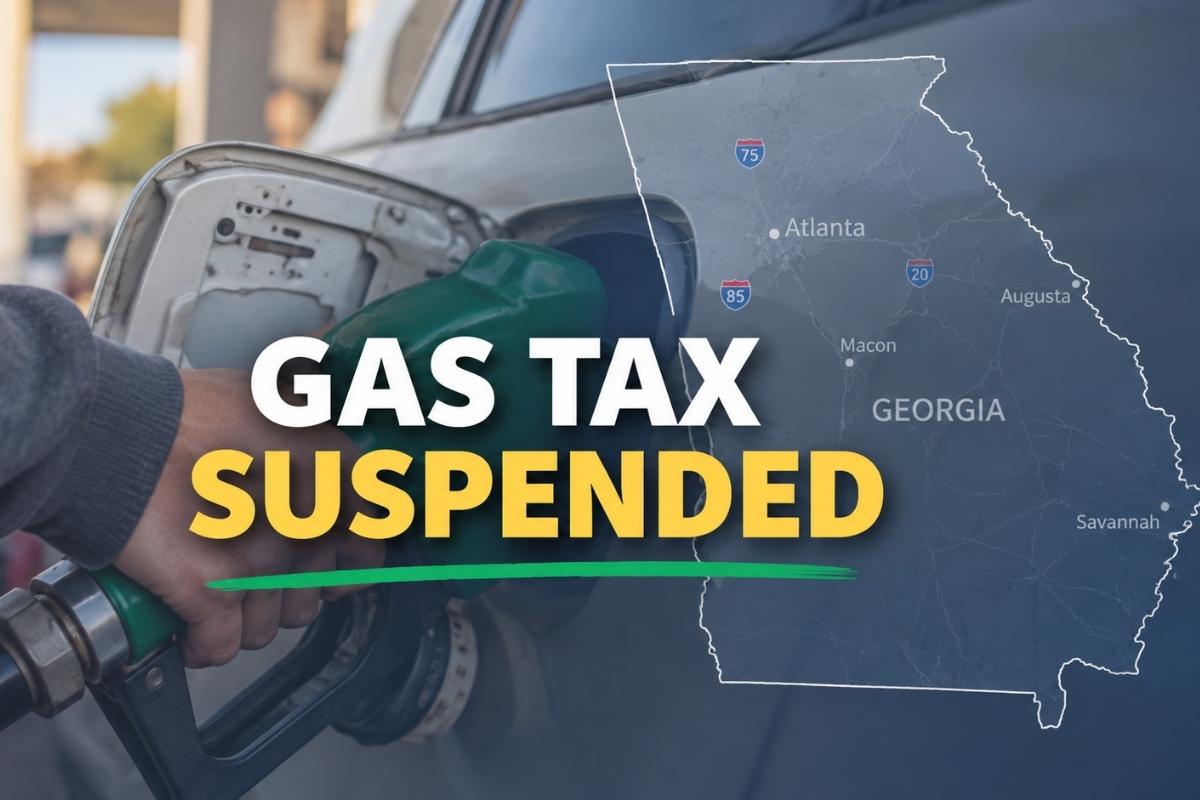
Georgia motorists began a new 30-day suspension of the state motor fuel excise tax at 12:01 a.m. on September 29, after Gov.
Brian Kemp declared a state of emergency amid volatile global energy markets and higher fuel prices. Current plans call for the suspension to run through October 29.
Motorists will temporarily not pay Georgia’s 33.3-cent-per-gallon excise tax on gasoline or its 37.3-cent-per-gallon tax on diesel.
Those figures matter, but they describe only one part of a retail fuel price. Crude oil costs, refining expenses, distribution, wholesale pricing and retailer margins continue to move independently.
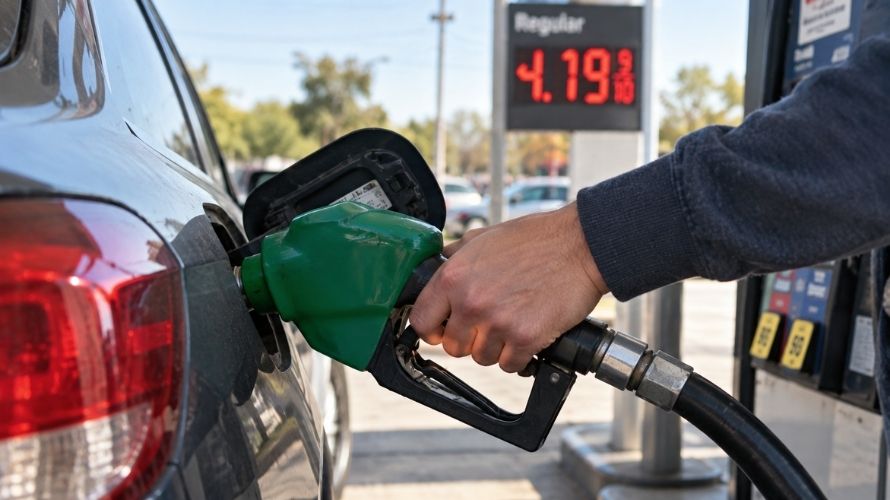
Kemp’s administration cited global market volatility and rising fuel costs in announcing the emergency measure. Georgia’s average regular gasoline price was about $4.19 per gallon at the time, while diesel averaged $6.24.
Experience with tax policy tends to make one cautious about simple explanations. Georgia has suspended one component of the price of fuel.
It has not suspended the economic forces determining everything else motorists see on a station sign.
What Drivers Should Actually Expect at the Pump
Prices will not necessarily fall by precisely 33.3 cents at every gasoline station on the first day. Retailers must work through inventories purchased under earlier pricing conditions, while wholesale fuel prices can change at the same time.
State officials allowed a short period before the order took effect partly so retailers could account for the tax adjustment in their pricing.
CBS reported Georgia regular gasoline at roughly $4.19 per gallon when the suspension was announced, about 10 cents higher than one week earlier and well above the roughly $2.87 recorded a year earlier.
For an ordinary driver, simple arithmetic gives a better sense of scale. A 15-gallon purchase carries $4.995 in Georgia gasoline excise tax at the 33.3-cent rate.
Suspending that charge therefore represents about $5 on such a fill-up, assuming the tax reduction is fully passed through in the pump price.
Diesel receives a slightly larger per-gallon reduction at 37.3 cents.
Commercial users buying hundreds or thousands of gallons can consequently see much larger nominal savings than a household buying one tank at a time.
Pump relief is therefore noticeable, particularly for frequent drivers, but it should not be confused with a large increase in household income.
Georgia Gives Up Road Revenue While the Tax Is Suspended
Georgia’s constitution directs an amount equal to state motor fuel tax collections toward public roads, bridges and related transportation purposes.
Suspending collection therefore reduces a revenue stream tied closely to transportation spending.
One learns quickly in public finance that suspending a tax does not suspend the expenditure for which the tax was collected.
Road maintenance, bridge work and transportation obligations continue during a tax holiday. Georgia plans to use accumulated surplus funds to compensate for lost motor fuel revenue, meaning the immediate financial burden shifts off current fuel purchases and onto money already held by the state.
View this post on Instagram
Recent revenue figures show that such suspensions are visible in state accounts. May 2026 net tax collections were down 12.6% compared with the same month a year earlier, with state officials noting that comparisons were affected by the motor fuel tax suspension then in force.
June collections were down 6.8%, with motor fuel tax changes again accounting for much of the difference.
Money has not ceased to be required. Georgia has simply changed the immediate source used to meet part of that obligation.
Commercial Trucks Are Covered by Another Part of the Order
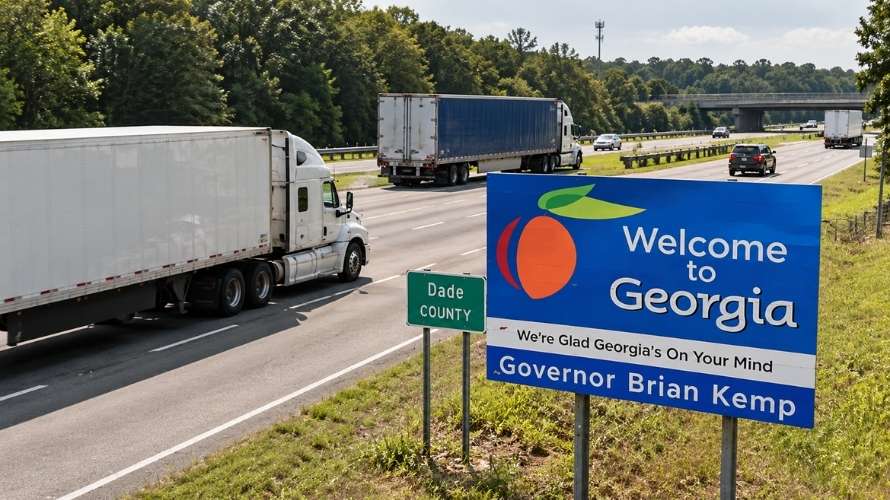
Commercial freight receives separate treatment under Kemp’s emergency order.
State weight limits on certain commercial vehicles are also suspended during the emergency period, a measure intended to reduce transportation costs for goods moving through Georgia.
Kemp’s administration has linked that change to the cost of moving everyday goods, including groceries.
Any eventual effect on retail prices will depend on fuel costs, freight contracts, labor, inventories and numerous other expenses, so a precise consumer saving cannot sensibly be assigned to the weight-limit change alone.
Temporary Gas Tax Suspensions Have Become Familiar in Georgia
Georgia has now used motor fuel tax suspensions several times during periods of unusually high costs or emergency conditions.
Similar measures appeared during the 2022 energy-price shock, again in 2023, after Hurricane Helene in 2024 and earlier in 2026.
Earlier this year, legislation suspended the tax for 60 days beginning March 20.
State leaders estimated that measure would save motorists and businesses nearly $400 million during the 60 days. Kemp later extended the suspension for another two weeks, through June 3.
Such frequency raises a straightforward fiscal question. A tax dedicated to transportation has value partly because it creates a predictable relationship between road use, fuel consumption and transportation revenue.
Repeated suspensions weaken that relationship temporarily and place greater reliance on accumulated state funds.
Temporary Relief, Unchanged Arithmetic
Georgians will temporarily avoid 33.3 cents per gallon in state gasoline excise tax and 37.3 cents per gallon on diesel through October 29.
State transportation costs, however, do not disappear during those 30 days. Surplus funds will absorb revenue losses that ordinarily would have been covered by motorists purchasing fuel.
Roads still require money. For the next month, Georgia will obtain part of that money somewhere other than the fuel pump.