
Bill Gates can afford almost any watch ever made, yet he has long been associated with inexpensive Casio models.
A billionaire wearing a watch that costs less than many people’s monthly phone bills makes an irresistible story.
Stories like that can also create a misleading picture. Plenty of billionaires spend extraordinary amounts on aircraft, yachts, houses, art, security, travel, and cars.
Nobody should conclude that extreme wealth is usually built by wearing cheap watches and refusing to order dessert.
A more interesting pattern appears when price is separated from value.
People who spend a lot of time thinking about money can become unusually resistant to paying more when the extra dollars provide little additional usefulness.
One thing I kept noticing while reading about the subject was that price itself often wasn’t the objection, and most people point out the lack of value.
But cheap watches are not the only thing billionaires prefer over costly counterparts. I will point out several types of spending that make that distinction particularly clear.
1. Designer Clothes Bought Mainly for the Logo
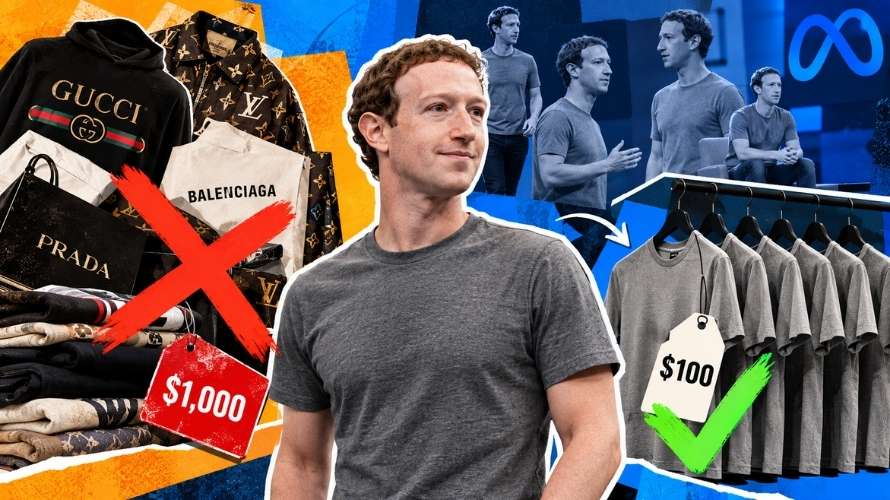
Mark Zuckerberg has spent years cultivating an almost aggressively simple wardrobe. His gray shirts and understated clothes have become recognizable precisely because they look so ordinary.
That does not mean expensive clothing is automatically wasteful. Better materials can last longer. Skilled tailoring can improve fit. Well-made shoes may survive years of regular use.
Comfort, construction, and durability all provide something tangible in exchange for a higher price. Logo pricing works differently. Imagine choosing between a $100 shirt and a $1,000 shirt.
Few people would seriously expect the second shirt to be ten times warmer, ten times more comfortable, or capable of lasting ten times longer. At some point, additional dollars start paying for branding, scarcity, exclusivity, and recognition.
Oddly enough, extreme wealth can make that signaling less necessary. Someone whose financial position is already obvious has little need to prove it with a logo across a shirt.
2. Luxury Watches When a Cheap One Does the Job
As we pointed out earlier, Bill Gates and his inexpensive watches may be the clearest example on this list. A basic Casio and a $50,000 mechanical watch can perform the same central task. Both tell you what time it is.
Luxury watches can offer several things that have little to do with timekeeping:
- intricate mechanical engineering
- hand finishing and craftsmanship
- rarity
- collecting value
- prestige
- social signaling
Someone who genuinely values those qualities may consider the money well spent. Collectors are not necessarily confused about what they are buying. Problems begin when price gets mistaken for usefulness.
A $20 watch can be dramatically better than having no watch at all. Jumping between $20 and $200 might add better materials and features.
Moving between $5,000 and $50,000 can produce extraordinary craftsmanship, but probably not a proportionate improvement in knowing when lunch starts.
3. Endless Subscriptions and Entertainment You Barely Use
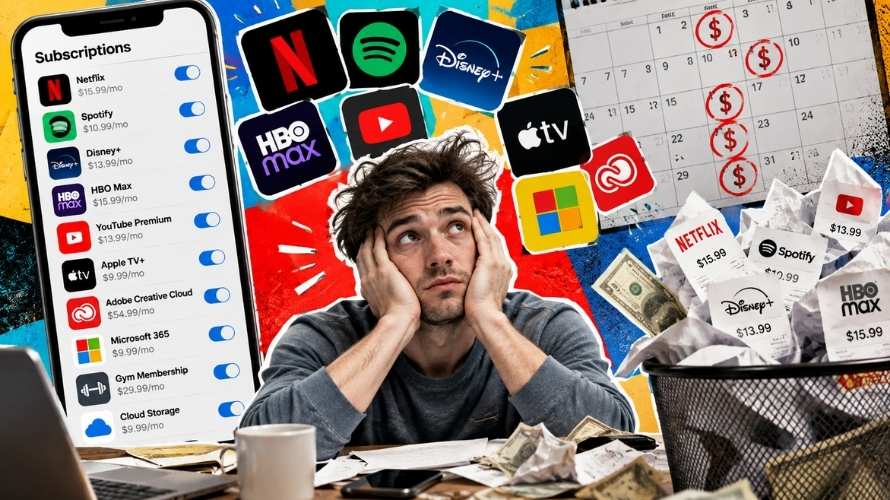
Subscription spending has changed how financial waste looks. Older forms of unnecessary spending usually required another decision. You had to walk into a store, pick something up, and pay for it.
Subscriptions require one decision at the beginning. Payments can then continue quietly for months or years. A $15 charge feels minor. Five forgotten $15 charges equal $75 each month, or $900 annually.
Add several larger software or membership payments and an apparently insignificant collection of recurring expenses can move into four figures.
One thing I find interesting about subscription spending is how little attention it asks of us. A company needs a customer to actively agree once. After that, inactivity can keep producing revenue.
That reverses the normal purchasing process. Instead of asking, “Do I want to buy this today?” the customer effectively has to notice the payment and make a deliberate decision to stop it.
4. Billionaires Do Not Make Impulse Purchases
Impulse spending sounds almost too ordinary for a discussion about billionaires. That may be exactly why it matters.
Just to understand how common impulse purchases are, we can see a study by Salsify that says 70% of buyers can’t resist that impulse.
One unnecessary $30 or $50 purchase will not determine anyone’s financial future. Arguments suggesting that skipping an occasional coffee somehow creates great wealth miss the scale of how large fortunes are actually built. Spending $50 each week on purchases you would not have made after a little thought equals $2,600 a year.
Stretch that habit across several decades and the lost amount gets much larger, particularly once potential investment returns enter the picture.
Opportunity cost is simply the value of what money could have done elsewhere. Every dollar gets one job at a time. Spend it today, and it cannot also sit in an investment account, pay down expensive debt, cover an emergency, or fund something you value more next month.
5. Lottery Tickets and Other Bad-Odds Bets
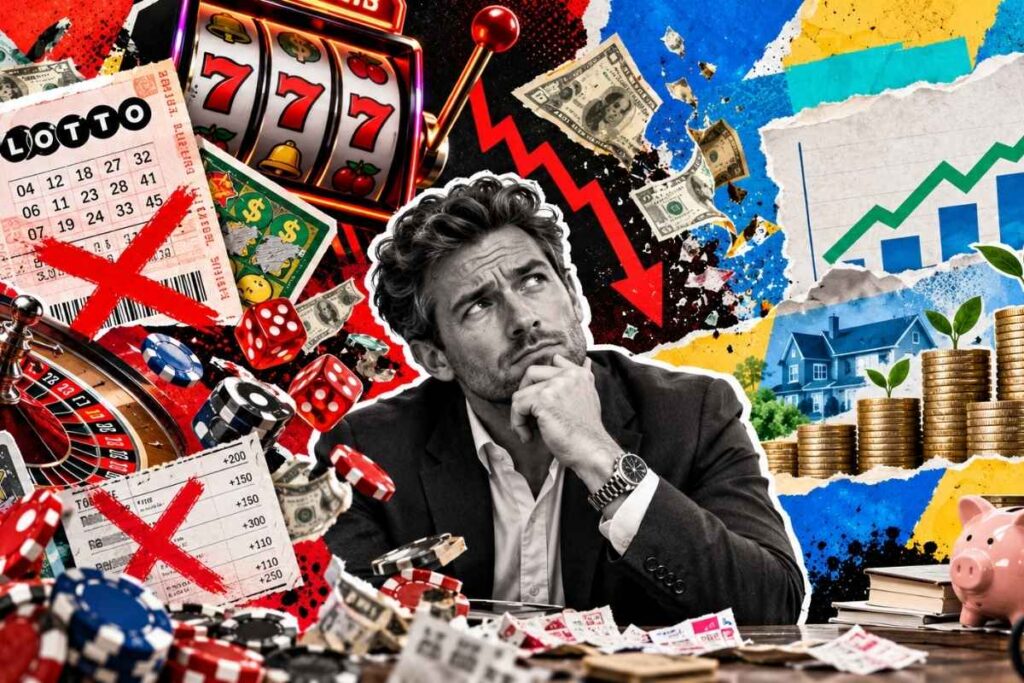
Lotteries offer something investing cannot: the possibility of becoming extraordinarily wealthy almost immediately. Probability is the problem. Lottery systems have prizes to pay, administrative expenses to cover, and, in many jurisdictions, government programs receiving part of ticket revenue.
Players as a group therefore cannot receive more money than goes into the system over long periods. Imagine repeatedly making the same type of bet thousands of times. Expected value asks what the average financial result would look like across all those attempts.
Games designed with an advantage for the organizer generally produce a negative expected value for players. For years, I assumed the strongest financial objection to lotteries was simply that winning was unlikely.
Structure matters even more. Players participate in a system intentionally built to pay less collectively than they wager.
Investing works on a very different principle. Buying productive assets can give an investor ownership of businesses, property, bonds, or other assets capable of generating income or increasing in value.
No return is guaranteed, and losses certainly happen, but the mechanism is not built around a permanently negative expected payout to participants as a group.
6. Credit Card Interest and Late Fees
Some expenses buy a product, convenience, memory, or service. Credit card interest can buy remarkably little. Using a credit card and carrying expensive revolving debt are not the same behavior.
Someone who pays the statement balance in full can use a card without paying purchase interest under normal grace-period rules. Consider a $5,000 balance carrying an annual percentage rate near 25%.
Leaving that amount unpaid for a full year could create roughly $1,250 in interest under a simplified calculation, before considering the effects of changing balances and compounding.
Nothing new arrives at your door for that $1,250. Late fees can be even harder to justify since they usually purchase no additional benefit at all. Payment arrived after its deadline, so the cost increased.
Practical defenses are not complicated:
- automate recurring payments when possible
- check statements regularly
- monitor balances before they become difficult to clear
- treat high-interest consumer debt differently than routine spending
Closing Thoughts
Skipping designer shirts, lottery tickets, or unused streaming accounts will not turn an ordinary household into a billionaire household.
Huge fortunes usually come through business ownership, investment, inheritance, valuable equity, or other large-scale asset ownership.
A cheap watch does not explain Bill Gates’ wealth. Still, spending habits can reveal something useful about how financially experienced people evaluate money.
Frugality does not have to mean spending as little as possible. A better definition may be reluctance to spend when value becomes difficult to identify.
Perhaps that is what makes all those stories about billionaires wearing inexpensive watches worth reading. Having vastly more money does not erase the difference between price and value.